
Food Imports by Mail After De Minimis: What CBP’s Entry Type 13 Means for FDA and USDA Compliance
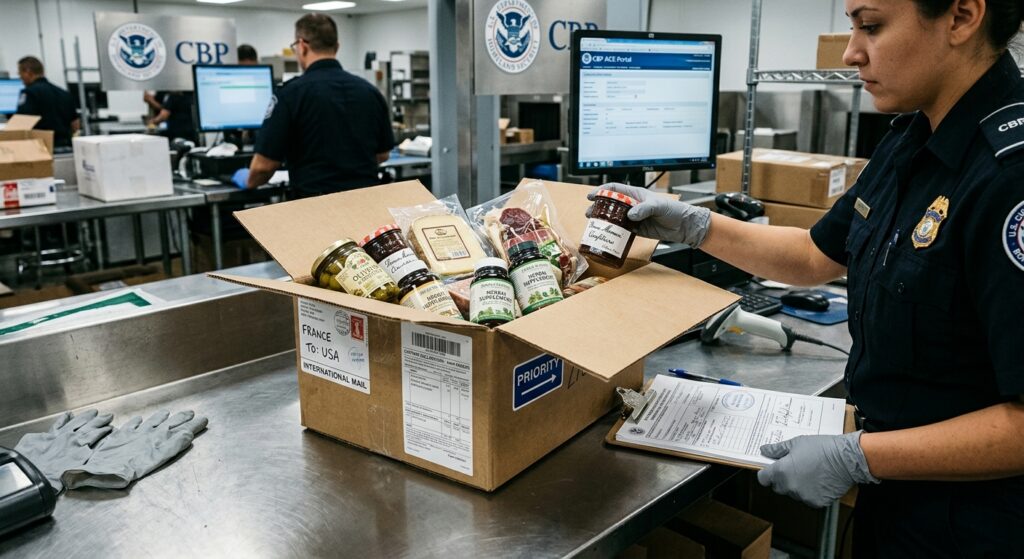
A photorealistic editorial-style image depicting an international mail package labeled with food import customs documentation arriving at a U.S. customs inspection station. The scene shows a sturdy cardboard shipping box with international postage markings sitting on a stainless steel inspection counter, surrounded by official-looking customs forms and compliance paperwork. In the background, blurred federal agency seals and a computer screen displaying a customs data entry interface suggest regulatory oversight. A customs officer's gloved hands are visible examining the package. Specialty food items such as glass jars of preserved goods, vacuum-sealed specialty products, and herbal supplement bottles are partially visible inside the open box. The lighting is cool and institutional, emphasizing the bureaucratic and regulatory nature of the scene. The overall tone is serious, procedural, and documentary in style, conveying the complexity of food import compliance and customs processing.

The suspension of de minimis duty exemptions for international mail has fundamentally changed how low-value food shipments enter the United States. Entry Type 13, launching as a voluntary ACE test on September 22, 2026, is the only informal entry pathway capable of carrying the full FDA and USDA Partner Government Agency data now required for mail shipments of food, dietary supplements, and other regulated products.

Read More